
Hunter Pyle | July 31, 2026
Hourly employees in the United States are generally entitled to overtime compensation if they work more than 40 hours in a single workweek under the federal Fair Labor Standards Act of 1938 (“FLSA”). (29 U.S.C. § 207.) Under the FLSA, overtime compensation is calculated as 1.5 times an employee’s regular hourly rate. In California, however, hourly employees are also entitled to overtime compensation in several other situations, in addition to FLSA’s weekly overtime requirement.
First, California hourly employees are entitled to daily overtime compensation if they work more than eight hours in a single workday, and for the first eight hours worked on the seventh consecutive day of work in any one workweek. (Cal. Lab. Code § 510(a).) The overtime rate for these daily overtime hours in California is calculated in the same way as under the FLSA: 1.5 times the employee’s regular hourly rate. Second, California law also requires employers to pay double time compensation to employees if they work more than 12 hours in one day, or more than eight hours on the seventh consecutive day of work in a single workweek. (Id.).
It is important to note that the “seventh day” overtime applies only to the seventh day worked in a workweek: the weekly hours reset at the beginning of each workweek. In other words, if an employee works eight days in a row, hours worked on the eighth day will be paid at the employee’s regularly hourly rate, not at the 1.5 overtime rate.
There are also a number of exemptions to California’s daily overtime compensation laws, depending on job duties, pay scale, and which IWC Wage Order applies to the industry that an employee works in. We have discussed the “white collar” exemptions for executive, administrative, and professional employees on this blog in the past. A few other notable exemptions are described below.
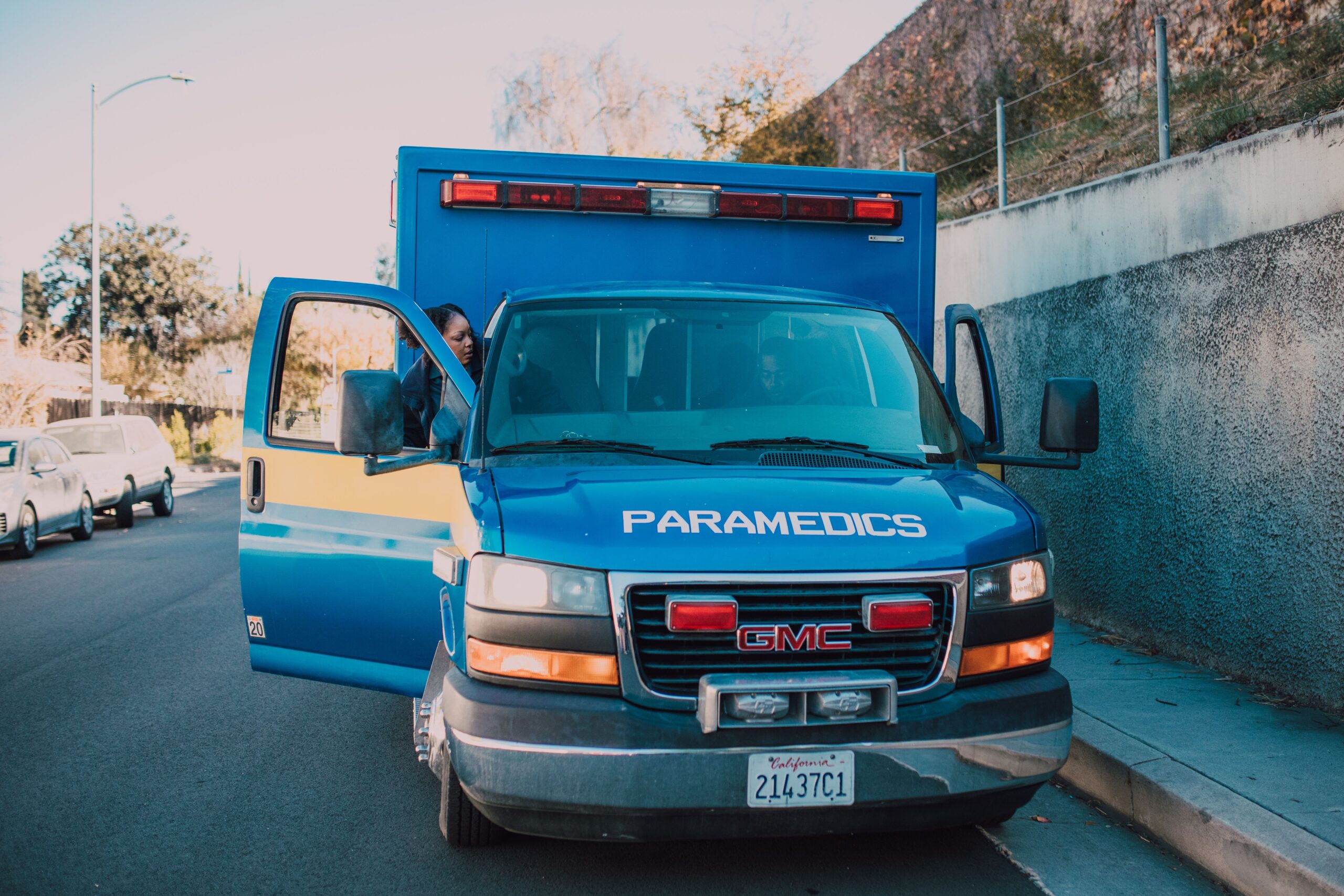
Ambulance Drivers and Attendants
IWC Wage Order No. 9 governs the wages, hours, and working conditions for employees in the transportation industry.1 Section 3(K) lays out the following exemption to California’s daily overtime compensation requirements:
“The daily overtime provision of subsection (A) above shall not apply to ambulance drivers and attendants scheduled for 24-hour shifts of duty who have agreed in writing to exclude from daily time worked not more than three (3) meal periods of not more than one (1) hour each and a regularly scheduled uninterrupted sleeping period of not more than eight (8) hours. The employer shall provide adequate dormitory and kitchen facilities for employees on such a schedule.” (8 C.C.R. § 11090, ¶ 3(K).)
The 3(K) exemption was initially enacted in 1976 to “address the unique need for 24-hour coverage by ambulance service and the special circumstances under which ambulance drivers work.” However, the exemption only applies to ambulance drivers and attendants who work 24-hour shifts, and only if they have agreed in writing to the daily overtime exemption.
Because the term “ambulance drivers and attendants” is not defined in the Wage Order and because the word “attendant” is vague, it is not clear whether the 3(K) exemption applies to all employees who work on ambulances. The application of the 3(K) daily overtime exemption must be carefully determined on a case-by-case basis, depending on the nature of the employer and an employee’s specific job.
Outside Salespersons
Neither California’s minimum wage nor overtime compensation laws apply to outside salespeople. (Cal. Lab. Code § 1171.) An “outside salesperson” is any person over the age of 18 who “customarily and regularly works more than half the working time away from the employer’s place of business selling tangible or intangible items or obtaining orders or contracts for products, services, or use of facilities.” (8 C.C.R. § 11070, ¶ 2(J).)
Outside salespeople are exempt from overtime, even though they do not traditionally fall under any of the other so-called “white collar” exemptions. The California Supreme Court defined a clear, quantitative test to determine whether an employee is exempt from overtime (or other wage and hour laws) as an outside salesperson in Ramirez v. Yosemite Water Co. (1999) 20 Cal.4th 785, 797. Ramirez held that an employee must actually spend more than 50% of their working hours engaged in direct sales activities away from the employer’s place of business. (Id.) To make this determination, courts must consider not just how an employee spends their time, but also “whether the employee’s practice diverges from the employer’s realistic expectations, whether there was any concrete expression of employer displeasure over an employee’s substandard performance, and whether these expressions were themselves realistic given the actual overall requirements of the job.” (Id. at 802.)
As with the 3(K) exemption of Wage Order No. 9, whether a person is considered an outside salesperson exemption must be evaluated on a case by case basis, particularly in light of the in the increase of remote work. Whether an employee works remotely from home and how much control an employer has over the employees work schedule and working conditions are both key considerations to determining whether the outside salesperson exemption from overtime applies. (See Espinoza v. Warehouse Demo Servs. (2022) 86 Cal.App.5th 1184, 1192–93.)
If you are an hourly California employee who believes that you may be owed overtime under the California Labor Code or the federal Fair Labor Standards Act, please feel free to contact the workers rights attorneys at Hunter Pyle Law, PC. We can be reached at (510) 444-4400 or at hunter@hunterpylelaw.com
1 Defined broadly as “any industry, business, or establishment operated for the purpose of conveying persons or property from one place to another whether by rail, highway, air, or water, and all operations and services in connection therewith; and also includes storing or warehousing of goods or property, and the repairing, parking, rental, maintenance, or cleaning of vehicles.” (8 C.C.R. § 11090, ¶ 2(N).)