
Hunter Pyle | July 31, 2026
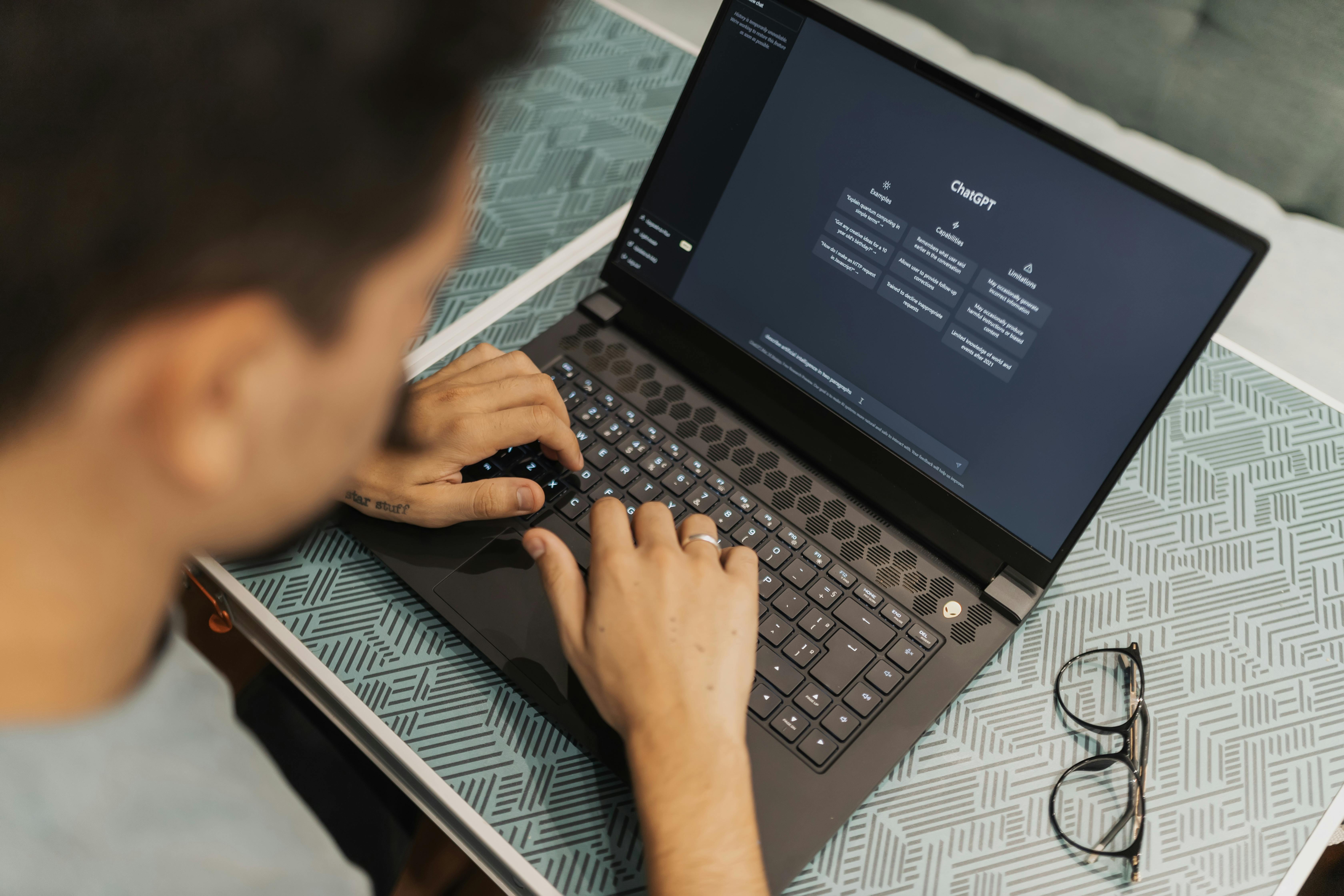
When a potential client presents what appears to be an AI-generated description of their case (including a detailed timeline, witness list, and reasons that they are likely to prevail), responsible attorneys should be concerned about whether their search history will be discoverable in litigation. As discussed below, two federal judges have considered related situations and reached different conclusions. Given this uncertainty, attorneys should act promptly to limit the likelihood that a judge will require the production of AI searches in response to discovery requests.
Read more: Can a Client’s AI Searches be Discovered in Litigation?
On February 10, 2026, federal judges in two different cases addressed the question of whether the AI searches of a party could be discovered in litigation. In Warner v. Gilbarco, Inc. (E.D.MI) Case No. 2:24-cv-12333, the court held that AI searches of a plaintiff representing herself could not be discovered by the defendant. In United States v. Heppner (S.D.NY) Case No. 25-cr-00503, the court concluded that the AI searches of a criminal defendant were not protected by either the attorney-client privilege or the work product doctrine.
Warner v. Gilbarco, Inc. (E.D.MI) Case No. 2:24-cv-12333 (“Warner”)
Warner is an employment discrimination case in which the plaintiff was, at that point in the litigation, representing herself. In response to a motion to compel, Magistrate Judge Anthony Patti of the Eastern District of Michigan ruled that she did not have to produce documents responsive to a discovery request seeking: “[A]ll documents and information concerning her use of third-party AI tools in connection with this lawsuit….”
Magistrate Judge Patti found that the plaintiff had properly objected to producing such documents and information under the work product doctrine, for several reasons. First, the plaintiff, as a pro se litigant, had the right to assert the work product protection over such material.
Second, in order to waive the work product protection, a party has to do so either to an adversary or in a way that made it likely that an adversary would be able to access the materials at issue. (In this way, the work product doctrine is different than the attorney-client privilege, which can generally be waived through voluntary disclosure to a third party.)
Finally, “ChatGPT (and other generative AI programs) are tools, not persons, even if they may have administrators somewhere in the background.” For all of these reasons, Judge Patti declined to require the plaintiff to disclose her “internal analysis and mental impressions-i.e., her thought process…which is not discoverable as a matter of law.”
United States v. Heppner (S.D.NY) Case No. 25-cr-00503 (“Heppner”)
Heppner, however, reached a very different conclusion. In that case, a grand jury returned an indictment charging Bradley Heppner various types of fraud. After he was arrested, the FBI executed a search warrant and seized electronic documents including 31 documents memorializing exchanges between Mr. Heppner and Claud, an AI tool that is operated by Anthropic.
Notably, Mr. Heppner conducted his Claude searches after it was clear that he was being investigated. However, he did so “without any suggestion from counsel.” Mr. Heppner’s searches generated reports that outlined defense strategies and “what he might argue with respect to the facts and the law.”
In response to the FBI’s actions, Mr. Heppner’s attorneys asserted both the attorney-client privilege and the work product doctrine. The United States Government then filed a motion seeking an order that the documents were not protected.
Judge Jed Rakoff of the Southern District of New York agreed with the US Government and held that Mr. Heppner’s searches were not protected from inspection by either the attorney-client privilege or the work product doctrine. First, Claude is not an attorney. Judge Rakoff therefore concluded that the attorney-client privilege, which protects communications between a client and their attorney, could not apply.
Second, Judge Rakoff concluded that Mr. Heppner could not have reasonably expected that his communications with Claude would be confidential. This is because Anthropic’s privacy policy indicated that it used inputs and outputs to train Claude, and that Anthropic could disclose such data to third parties including “in connection with claims, disputes [] or litigation.”
Finally, Judge Rakoff concluded that Mr. Heppner did not communicate with Claude in order to obtain legal advice because he was not act at the suggestion or direction of counsel. If he had, then the result might have been different. See, e.g., U.S. v. Kovel (2d Cir.1961) 296 F.2d 918 (attorney-client privilege may apply to communications to non-attorney employee of a law firm).
Turning to the work product question, Judge Rakoff concluded that the doctrine did not apply because the searches were not “prepared by or at the behest of counsel.” Nor did they reflect defense counsel’s strategy. The fact that Mr. Heppner’s attorneys’ strategy was affected by the searches did not change that conclusion.
Squaring Warner and Heppner
Warner and Heppner are not binding on California courts. However, it is worth considering whether and how these cases can be squared.
One glaring difference between the cases is that Mr. Heppner was not acting in response to any requests made by his attorneys. Ms. Warner, on the other hand, was representing herself. So there was no separation between her and her counsel. This same logic would seem to apply to prospective clients who are representing themselves, and, in that sense Warner should be helpful to plaintiff’s counsel if a defendants seeks to discover AI searches from the time period before the plaintiff was represented by an attorney.
However, the question gets thornier when clients are represented by counsel but decide to conduct AI searches on their own. Under Heppner, those searches would be fair game in discovery. Until this issue is decided in California, counsel in the Golden State may wish to consider issuing clear guidance to their clients on this issue, as discussed in the following section of this blog.
How can Practitioners limit the likelihood that their Client’s searches will be discoverable?
As of the date this blog is posted, the author is not aware of any California cases that have addressed these issues. Until that happens, practitioners should consider taking the following steps to limit the likelihood that their client’s AI searches will be discoverable.
Courts are only beginning to grapple with the question of how AI will impact critical concepts such as the attorney-client privilege and the work product doctrine. This blog post is not legal advice and should not be treated as such. If you have questions about any of the issues discussed in this post, please contact an attorney in order to discuss them.