Hunter Pyle | July 21, 2026
Hunter Pyle Law files Amicus Brief on behalf of CELA, LAAW, and Impact Fund on Transportation Worker Exemption
Hunter Pyle | February 19, 2026
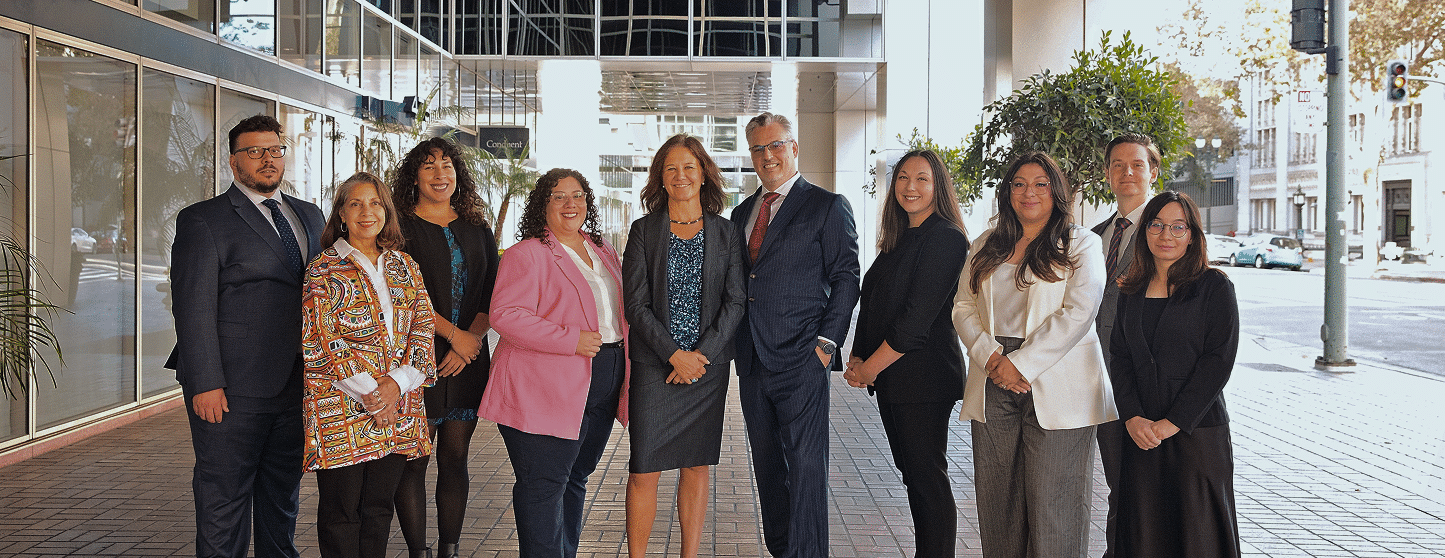
On January 27, 2026, Hunter Pyle Law filed a friend of the court brief on behalf of the California Employment Lawyers Association (“CELA”), Legal Aid at Work (“LAAW”), and Impact Fund requesting publication of the opinion in Clinton et al. v. Amazon Logistics, Inc. et al. (“Clinton“). Clinton sheds important light on the scope of the transportation worker exemption (“TWE”), found in section 1 of the Federal Arbitration Act (“FAA”) as it applies to last-mile drivers. The scope of the TWE is important because an increasing number of companies use such drivers to provide the final stages of delivery for their products.
If the TWE applies to these workers, then the FAA does not preempt California law and the drivers can challenge any arbitration agreements containing class action waivers as unconscionable. (See Muro v. Cornerstone Staffing Solutions, Inc. (2018) 20 Cal.App.5th 784, 789 [rule of Gentry not preempted where TWE applies.].) On the other hand, if the TWE does not apply, then the FAA will preempt most efforts to challenge any arbitration agreements.
Clinton clarifies the TWE in several ways. First, it holds that that California last-mile driver cases that predate the US Supreme Court’s decision in Southwest Airlines Co. v. Saxon (2022) 596 U.S. 450, 455–456 (“Saxon”) remain good law. Additionally, it provides crucial insight with regard to two defenses that are common in TWE cases. The import of these holdings will only continue to grow as more companies use last-mile drivers and require them to sign arbitration agreements with class action waivers.
It was an honor work with CELA, LAAW, and Impact Fund on this project. It will be interesting to see if the California Supreme Court orders Clinton to be published.
Related Articles
-
-
Hunter Pyle | May 22, 2026
-
 Kim Misenhimer | October 23, 2025