
Hunter Pyle | July 31, 2026
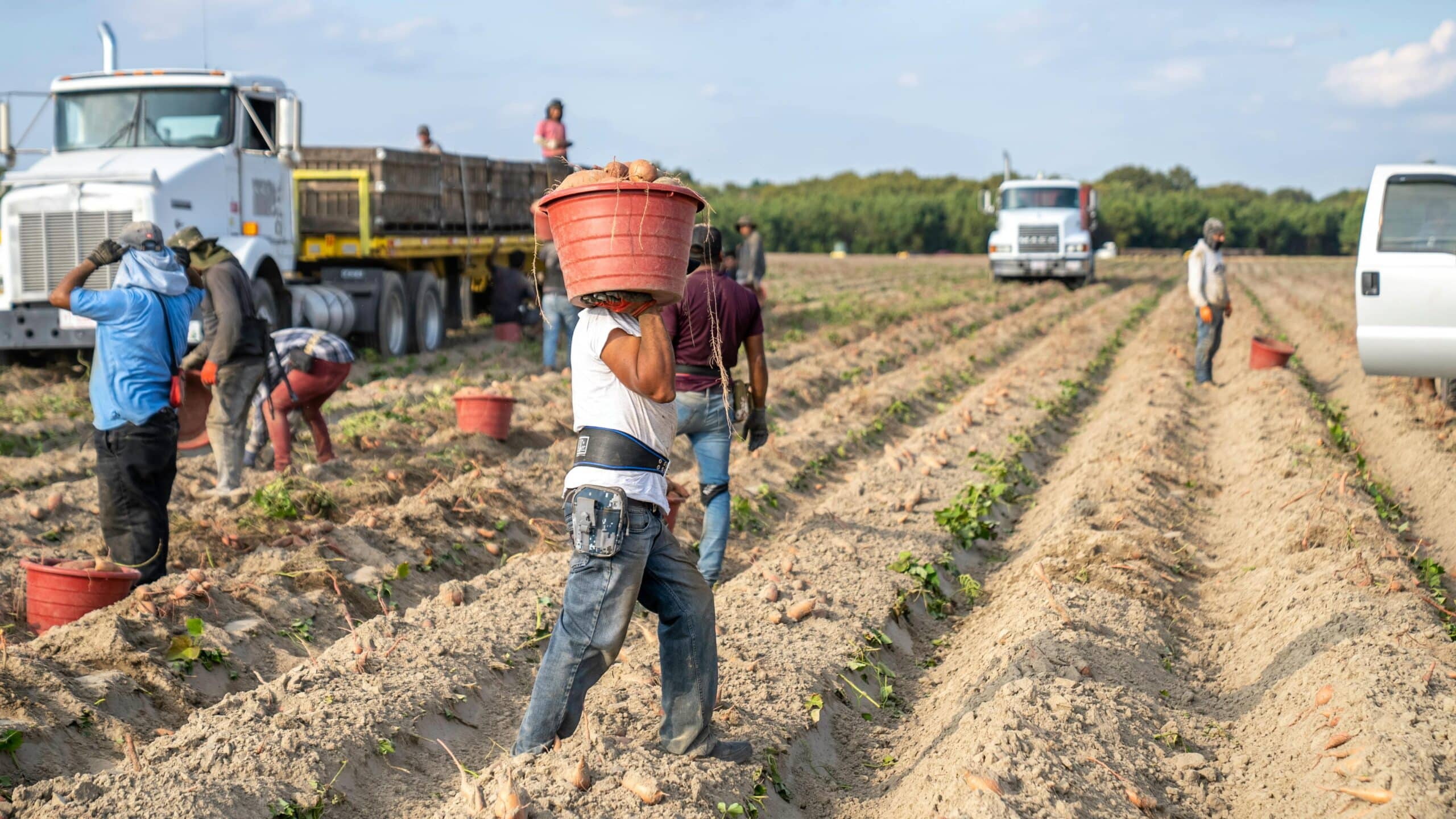
Under the Fair Labor Standards Act of 1938, most agricultural workers are excluded from overtime compensation under federal law.[1] In other words, most agricultural workers are not legally entitled to an overtime rate of 1.5 times their regular rate of pay for hours worked over 40 per week.[2]
In 2016, recognizing that agricultural workers engage in “back-breaking work every day” and “few occupations [today] are as physically demanding and exhausting as agricultural work,” California enacted the Phase-In Overtime for Agricultural Workers Act.[3] The Act created a schedule for overtime pay rate increases under state law for agricultural workers depending on the employer size.[4]
|
Overtime Rates for Agricultural Workers in California
|
||
|
Effective Date for Employers with 26 or More Employees |
Effective Date for Employers with 25 or Fewer Employees |
Overtime Rate Required After the Following Work Hours Per Day and Hours Per Workweek
|
|
January 1, 2019
|
January 1, 2022 |
9.5 / 55 |
|
January 1, 2020
|
January 1, 2023 |
9 / 50 |
|
January 1, 2021 |
January 1, 2024 |
8.5 / 45
|
|
January 1, 2022* |
January 1, 2025* |
8 / 40
*Plus double the regular rate of pay required after 12 hours in a workday
|
Table adopted from the California Labor Commissioner’s Office – Overtime for Agricultural Workers.[5]
For example, starting January 1, 2019, agricultural workers employed by an employer with 26 or more employees are entitled to 1.5 times their regular rate of pay for all hours worked over 9.5 hours in one workday or more than 55 hours in one workweek. For agricultural workers employed by an employer with 25 or fewer employees, they are entitled to overtime at the rate and hours described above starting January 1, 2022.[6]
Additionally, regardless of the employer size, agricultural workers are entitled to 1.5 times their regular rate of pay for the first 8 hours worked on 7th consecutive day of work, plus 2 times their regular rate of pay for all work performed in excess of 8 hours on the 7th consecutive workday.[7]
Beginning January 1, 2017, agricultural workers are entitled to other Labor Code protections regarding their workplace rights. For example, agricultural workers are entitled to meal periods (a 30-minute unpaid and off duty meal period for every 5 hours of work) and rest periods (a 10-minute paid and off duty rest period for every 4 hours or major fraction of work).[8]
Employers are required to keep accurate records pertaining to their employees’ time records (e.g., start of work, end of work, and meal and rest periods), total wages paid, and total hours worked during a pay period.[9] These records must be available to employees upon request and must be kept by the employer for at least three years.[10]
Moreover, employers are required, at semi-monthly intervals or at time when wages are provided to employees, to provide their employees with an itemized wage statement with information including pay period dates and all deductions.[11] These records must also be available to employees upon a reasonable request and must be kept by the employer for at least three years.[12]
Agricultural workers are broadly defined to those who engage in various aspects regarding an agricultural or horticultural commodity. For example, agricultural workers include, and are not limited to, those who engage in the:
If you are a California agricultural worker and have questions about your rights, please feel free to contact the attorneys at Hunter Pyle Law, PC, to make use of our free and confidential intake process. We can be reached at inquire@hunterpylelaw.com or (510) 444-4400. We look forward to hearing from you.
[1] 29 U.S.C. § 213(a)(6).
[2] See DOL Fact Sheet #12: Agricultural Employment Under the Fair Labor Standards Act (FLSA), available here.
[3] Cal. Lab. Code §§ 858(a)-858(d).
[4] Cal. Lab. Code § 860.
[5] See California Labor Commissioner’s Office – Overtime for Agricultural Workers, available here.
[6] See California Labor Commissioner’s Office – Overtime for Agricultural Workers, available here; see also IWC Wage Order 14 §§ 3(A)(1)(a), 3(A)(2)(a).
[7] See California Labor Commissioner’s Office – Overtime for Agricultural Workers, available here; see also IWC Wage Order 14 §§ 3(B).
[8] See California Labor Commissioner’s Office – Overtime for Agricultural Workers, available here; see also IWC Wage Order 14 §§ 11(A), 12.
[9] IWC Wage Order 14 § 7(A).
[10] IWC Wage Order 14 § 7(E).
[11] IWC Wage Order 14 § 7(C).
[12] IWC Wage Order 14 § 7(E).
[13] IWC Wage Order 14 § 2(D).